



For a free text editor, Notepad++ carries unusual weight: it is the default answer when a Windows user outgrows Notepad but wants no heavyweight IDE. A widely reported attack on its update infrastructure recently shook that trust, so the case for it deserves a fresh look before you download.
Notepad++ covers the gap between Notepad and an IDE for free
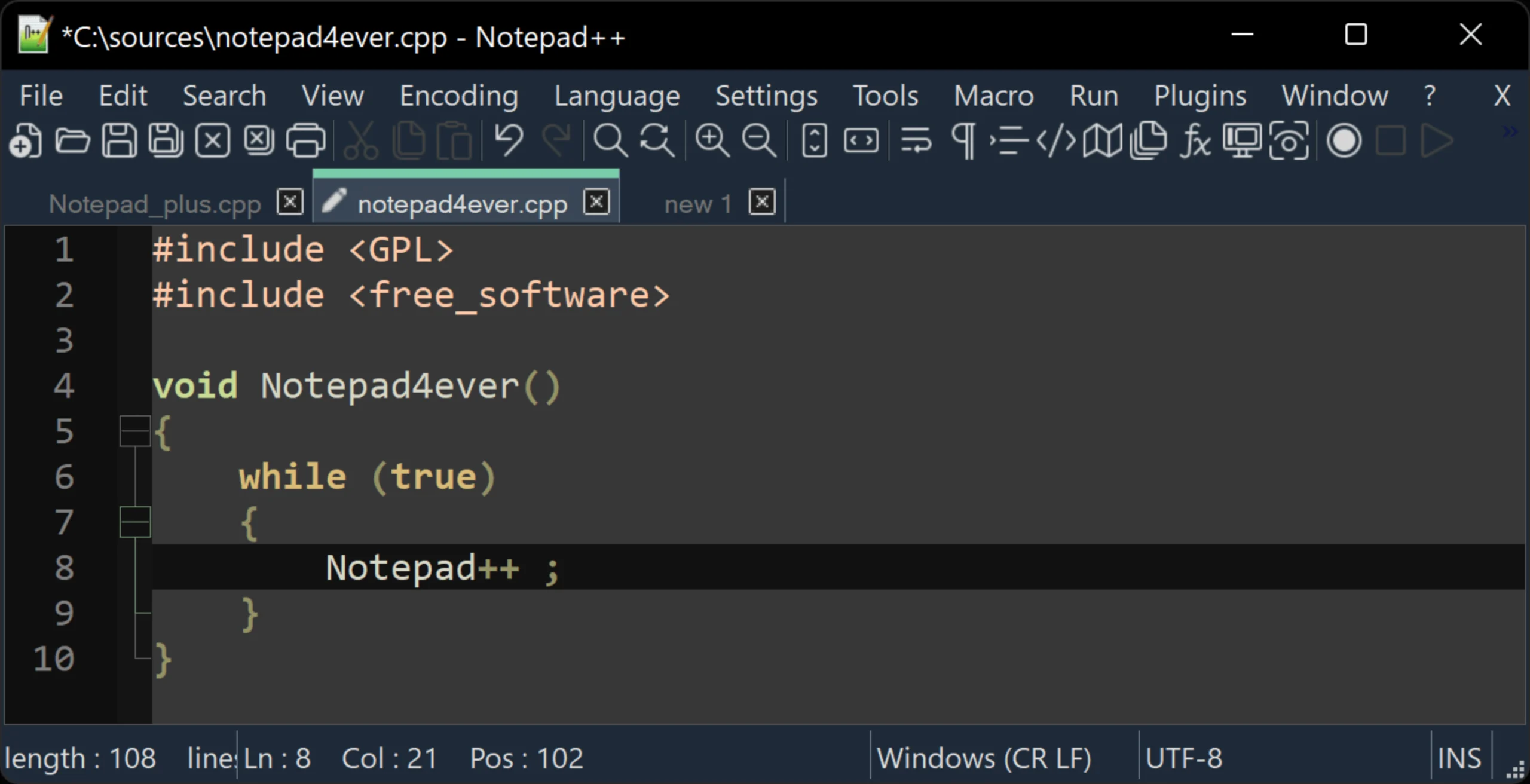
The core advantage is speed without ceremony. Notepad++ opens in well under a second because it is native C++ built on the Scintilla editing component, not a browser wrapped around a text box like the Electron apps. That answers the question most people ask before they download Notepad++: why pick it over VS Code when both cost nothing? VS Code is a small IDE; this is the tool for fixing one line without waiting for anything to load. The trust wobble around developer Don Ho’s project deserves a plain telling: attackers compromised its update hosting and redirected some auto-update requests toward malicious servers. The editor’s own code was never breached, and current builds verify update signatures before applying anything. The incident hit the update pipeline, not the editor, and for fast everyday editing on Windows nothing free comes close.
What earns Notepad++ the download over plain Notepad?
Syntax coloring and code folding cover dozens of languages, so a Python script, an HTML page, and a batch file each open readable instead of as a wall of black text. Tabs hold dozens of documents. The quiet star is find and replace: full regular-expression search across every open file at once, turning an hour of manual log cleanup into one careful pattern. Macro recording replays a fiddly edit sequence, and all of it is free with nothing held back for a paid tier. The weak spot is autocomplete, which suggests words without real context awareness, so treat this as a text editor for code rather than a code intelligence tool.
Plugins, macros, and a portable edition stretch the editor further
Well over a hundred community plugins install from the built-in Plugins Admin, adding file comparison, JSON formatting, spell checking, and timed autosave:
The download also comes in a portable edition that runs from any folder or USB stick with no admin rights, a quiet favorite on locked-down office machines. One fact settles many decisions early: Notepad++ is Windows-only, in 64-bit, 32-bit, and ARM64 builds.
Notepad++ next to Sublime Text, VS Code, and UltraEdit
Sublime Text is the closest rival in spirit: also native, also quick, steadier with multi-gigabyte files, but paid after its trial. VS Code wins for project work, bringing debugging, Git integration, and context-aware completion at the cost of a slower start and a larger footprint. UltraEdit courts enterprise users with commercial support, but it is subscription software in a category with excellent free options. The positioning is clean: quick edits on a Windows machine belong to Notepad++, multi-file development belongs to VS Code, and anyone splitting time across operating systems should put their money on Sublime Text.
Native code keeps it quick where Electron editors drag
Built on the Win32 API and Scintilla, the editor launches fast enough to feel instant and idles at a footprint that barely registers in Task Manager. It stays responsive with long documents that make browser-based editors stutter. The ceiling is very large files: logs in the hundreds of megabytes open fine, while multi-gigabyte monsters slow scrolling and search.
Still a first install on a fresh Windows machine
Anyone on Windows who edits text beyond the occasional note should keep Notepad++ around: it costs nothing, weighs almost nothing, and has outlasted a generation of flashier editors. Skip it only if your work lives in multi-file projects with debugging, or if your day is split with a Mac. For everyone else it is an easy call and well worth the download.